

When practitioners stop and share: networks grow by Paul Stepczak
Capitolo #101: CommunityLand Global Talks

Bentornato/a in un nuovo capitolo di CommunityLand!
Questa settimana andiamo oltre i confini del mercato italiano per entrare dentro una riflessione profonda e concreta su cosa significa davvero lavorare con le community, quando non si parla di teoria, ma di pratica quotidiana, di territori complessi e di bisogni reali.
Lo facciamo attraverso la voce di Paul Stepczak, community expert con oltre vent’anni di esperienza, che opera in uno dei contesti socialmente più fragili del Galles. Il suo contributo non nasce da modelli accademici o framework astratti, ma da un lavoro vissuto sul campo, dove ogni decisione ha un impatto diretto sulle persone e dove trovare tempo per fermarsi a riflettere non è scontato, ma diventa una scelta necessaria.
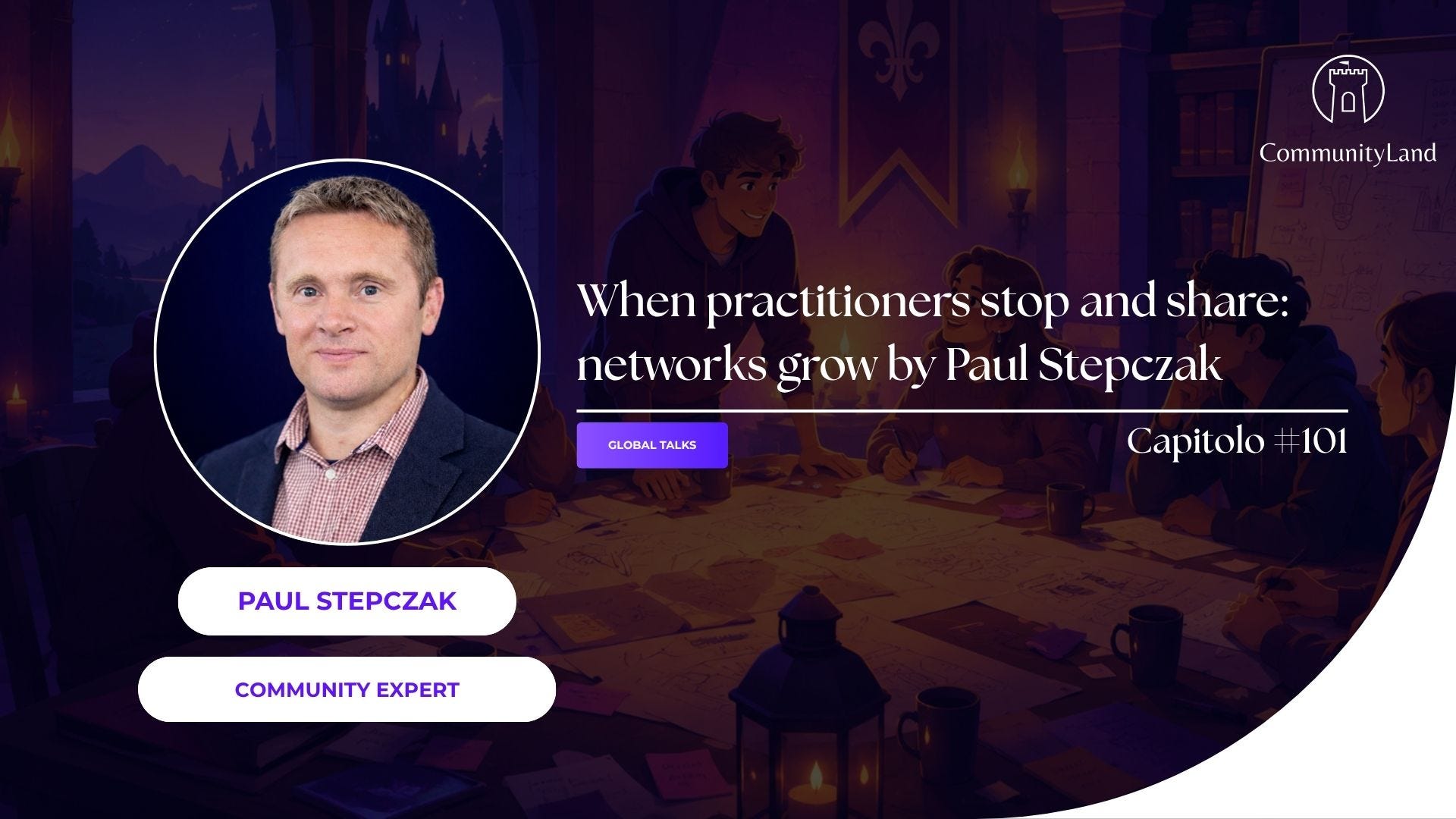
Questo articolo mette al centro un tema spesso sottovalutato anche nel nostro settore: il valore della riflessione come pratica operativa, non come esercizio teorico. Perché è proprio lì che emerge una delle distinzioni più importanti per chi costruisce community: quella tra ciò che le persone “hanno bisogno” e ciò che le persone “vogliono davvero”.
Un contributo che ci porta dentro un approccio asset-based, dove la community non è vista come qualcosa da guidare, ma come qualcosa da ascoltare, supportare e abilitare, e che apre una riflessione più ampia su come le reti, le relazioni e la conoscenza condivisa possano diventare leve concrete di apprendimento e crescita, anche tra contesti e paesi diversi.
Un punto di vista che si collega direttamente anche alle sfide del mercato italiano, dove spesso siamo così immersi nell’operatività da perdere l’occasione di fermarci, osservare e imparare da ciò che già esiste intorno a noi.
Paul, let’s dive in!
We do not lead. We resource. We support. We stand alongside.
I have spent over 20 years as a community practitioner, working in (and still living in) one of the most deprived areas of Wales. I am not an academic or an expert. I share lived experience. What continues to surprise me is how far honest, reflective exchange travels across the global community development movement.
For the first 10 years of my career I worked in the same small, socially deprived village where I grew up. I understand the daily reality that practitioners face - juggling community need, meeting funding expectations, governance, safeguarding, and survival. Finding time to stop, reflect, analyse, and learn feels like a luxury.
Yet reflection is not a luxury. It is essential to survival.
I have been fortunate to work alongside colleagues and action-research teams who created space for reflective practice and cannot stress enough how transformative that has been.
My first lesson of self-reflection taught me something simple but profound: there is a difference between what communities “need” and what communities “want”.
A need is often a statistic, an external perception, sometimes even a stereotype.
A want is something the community is actively asking for… and that can be even more complex and demanding.
However, communities are not empty vessels waiting for professional expertise. They are full of skills, networks, and lived knowledge. When we understand what communities want, our role shifts.
We do not lead. We resource. We support. We stand alongside.
And because communities are complex and constantly evolving, that adaptation must be continuous.
And to be continuous we need to find the time to… stop, reflect, analyse, and learn!
The Challenge
Community practitioners are stretched. There is little space for structured learning or shared reflection.
Yet the pace of social change demands that we learn faster.
When I was working in my local community, I barely found time to look up and learn from the next village, never mind the next province, country, or continent. Most of us are so immersed in immediate pressures that we operate with our heads down.
But in reality, it is highly likely that someone, somewhere, has faced the same challenge you are facing. And they may hold invaluable insight into what worked, what failed, and what they would do differently.
So how do we learn quickly without reinventing the wheel? The answer was closer than I realised. As an asset-based practitioner, I began by looking at what we already have. Two of the most powerful strengths we possess are:
Social assets - our networks and relationships
Human assets - our knowledge, experience, and skill
The knowledge we need often already exists within our communities and among practitioners. It simply needs to be recognised and shared. When we connect what is already there, learning travels faster – without constantly reaching for another course or framework.
The Turning Point
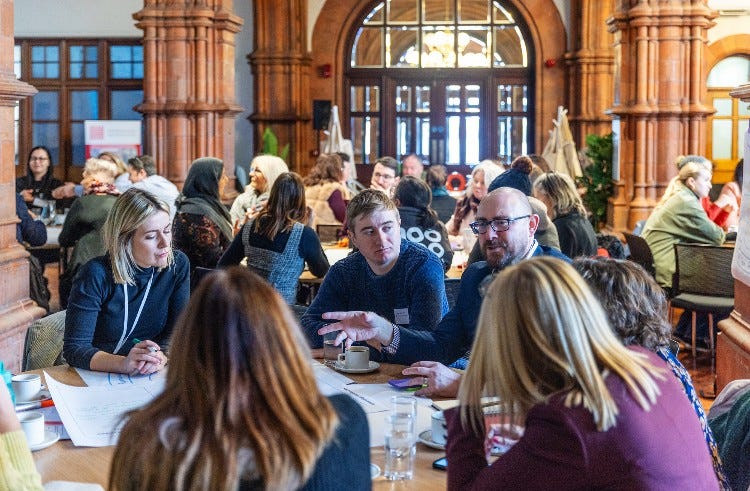
I am part of a two-person team delivering Start Something Good® social hackathons. Across Wales and further afield, we convene diverse groups around real social challenges. Each event brings together multiple, small, mixed teams - typically 5 to 8 people per team - including lived experience, public services, businesses, academia, young people, and local organisations.
From delivering over 75 events across issues such as food poverty, asylum resettlement and placemaking, I began to notice something in the conversations themselves. Assumptions that had been held for years were being clarified. Misunderstandings became clearer. People who had arrived defending positions slowly shifted towards exploring possibilities together.
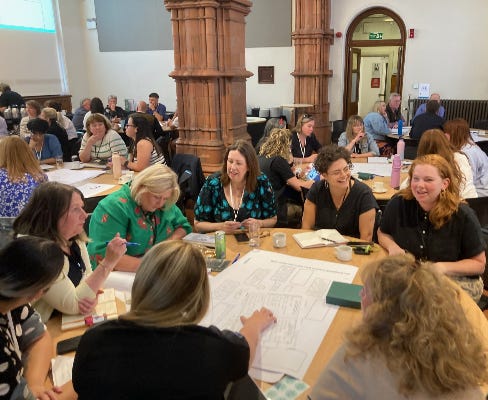
I saw the same dynamic through my work with Social Leaders Wales, where social leaders from different provinces come together in experiential programmes culminating in Start Something Good® hackathons. The value was not only in the solutions produced, but in the rare opportunity to connect, build relationships, and learn from one another. The most powerful insights were rarely delivered by keynote speakers or external consultants. They emerged from lived experience, peer reflection and shared practice.
As a result, over the past two years the programme has convened 145 social leaders to explore a simple question: what is the future for leadership development in the social sector?
The strongest demand was not for more courses or formal training, but for opportunities to connect - to learn from one another and share lived experience. By reaching this conclusion together and co-designing what that networking should look like, the programme has gained far greater ownership and sustainability than if it had been imposed as another external initiative.

The Solution – The Participation Paper
In early 2024, I began sharing reflections from these experiences on LinkedIn. The response was immediate and global. Practitioners from different countries, contexts and sectors recognised the same tensions and lessons.
In October 2025, when a community group asked me whether newsletters were “worth writing”, I decided to test it. That evening, I combined thoughts from three of my previous LinkedIn posts on the subject of “Doing With” to create an 800-word article and published Edition 1 of The Participation Paper.
Within 72 hours, over 1,000 people subscribed and The Participation Paper was born.
The aim is simple: share practice in the open, for community practitioners, by community practitioners.
It is not expert commentary. It is not a platform for positioning authority. It is a space where lived experience is valued, where community members and practitioners can share what has worked for them, and where institutions can learn alongside communities.
Each edition draws on lived experience, case studies, and increasingly, contributions from others. In Edition 5, I invited a co-author to explore monitoring, evaluation and learning and included links to case studies from across the World. In Edition 6 (still in progress at the point of writing), I ask experienced practitioners across Italy, India, San Diego, Australia, the UK, and Canada:
“If you could go back to the start of your community development journey, what three pieces of advice would you give yourself?”
Where else could the next generation of practitioners get advice like that?
The newsletter aims to connect community leaders who might never otherwise meet, allowing them to exchange experiences, reflections, and lessons across borders.
I like to think of it as “networking for good”.

Best Practice and Learning
Three lessons stand out.
1. Reflection must be habitual.
I now write for five minutes every day. Sometimes it becomes a post. Sometimes just a paragraph. Sometimes it doesn’t get published. Yet I find that writing forces reflection and reflection improves practice.
2. Learn inside and outside your context.
There is no need to reinvent the wheel. Someone, somewhere, has faced a similar challenge. Look beyond your sector. Look beyond your country. Adapt what works. Communities are rich in assets. Practitioners are rich in experience. Our job is to make those connections.
3. Be useful, not an expert.
Tools and frameworks are helpful, but they must be contextual. Every community is different. Trust and relationships remain the constant. Authority is less powerful than usefulness.
For growing social movements, I like to refer to Malcolm Gladwell who identifies three roles:
Connectors - who convene
Mavens - who share knowledge
Salespeople - who hold trust
For maintaining momentum, Sullivan and Hardy highlight:
Liberators - who remove friction
Collaborators - who work alongside
Supporters - who sustain energy
Strong community ecosystems need all of the above.
The Participation Paper is my attempt to create space where these roles can connect, learn and strengthen one another.
The question is not whether we need more engagement.
The question is whether we are investing in the networks and assets that already exist within our communities.
And perhaps more personally: Which role will you choose to play?
Come sempre, grazie per essere arrivato/a alla fine di questo articolo.
Se vuoi leggere la versione italiana, sarà disponibile da domani all’interno del gruppo Telegram di CommunityLand. Se preferisci leggere il contenuto in italiano, entra nel nostro gruppo Telegram e troverai tutto lì.
Se invece vuoi commentarlo ora, puoi farlo dal pulsante qui sotto oppure raccontarci e condividere la tua esperienza scrivendoci a hellocommunityland@gmail.com.
Ci vediamo nel prossimo capitolo di CommunityLand Global Talks.
La tua voce conta: il sondaggio per la community
In queste settimane stiamo raccogliendo feedback e pareri da parte della community per continuare a migliorare e portare attività e contenuti sempre più in linea con le tue esigenze. Per aiutarci, ti chiediamo di partecipare a questo semplice sondaggio di 3 minuti dove potrai raccontarci le idee e proposte e valutare le nostre attività!
Se vuoi entrare a far parte della community e conoscere altri appassionati ed esperti di community management iscriviti al nostro gruppo Telegram dall’immagine qui sotto!
